Blood collection and pumping at abattoirs
Blood is a very difficult liquid to pump. Experience has shown that an air-powered diaphragm pump is the best option when pumping blood at abattoirs. Why?
Blood is collected on the floor drain of an abattoir process area. Depending on the particular animal being slaughtered, and the means used, the result will be a collection of other unwanted materials, together with blood. These unwanted materials may include things such as wool, hide, bone, hoof and horn pieces.
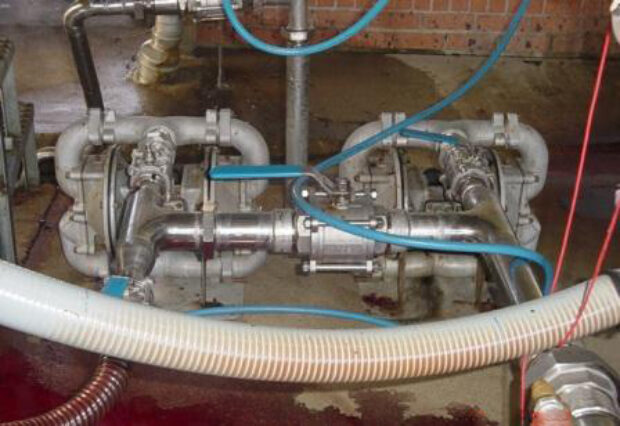
Typically an abattoir blood pump is installed between the floor drain and a collection tank and is required to handle any of the unwanted materials that may be carried to it with the blood. Many of these solids are irregular in shape and size and this can pose problems for a conventional non-solids-handling pump.
The best choice for handling blood with some solids is the Sandpiper HDF (Heavy Duty Flap Valve) pump. Sandpiper HDF pumps are designed to handle irregular pipeline-sized solid particles without blocking. Basically, if a solid can pass down the pipe, the Sandpiper HDF pump can pass it.
Sometimes blood can be left which congeals and again this is not a problem for the Sandpiper pump to handle and pass.
Typically ball-valve-type diaphragm pumps are not suited to these applications due to the random nature of the size, type and consistency of solids that may be encountered at abattoirs and the ability of those pumps to cope with irregular solids.
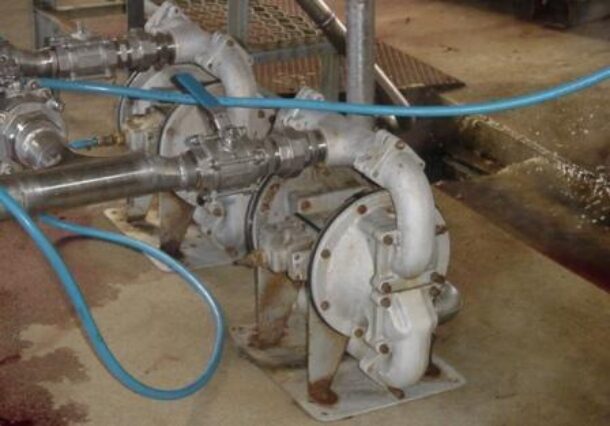
Materials of construction are also quite important. Blood can be corrosive so typically Kelair’s engineers would not recommend the use of aluminiumbodied pumps as these could be open to accelerated corrosion. Rather we recommend the use of cast iron pumps, or in some cases, the client may prefer to use stainless steel. Generally Buna-N or EPDM elastomers are more than suitable for blood and abrasives.
Sandpiper recently upgraded what was for 40 years the SA Series pump range to the HDF (Heavy Duty lap Valve) series. The enhancements made by Sandpiper’s engineers to these pumps were based around extending the diaphragm life by including a wear pad of sacrificial rubber that is sandwiched between the diaphragm and the piston plate.
Sandpiper’s engineers also beefed up the pilot valve plunger pin and bushing area of the pump to reduce the unlikely risk of the pin bending. Both of these enhancements are now standard across the HDF2, 3 & 4 (50, 75 & 100mm) model pumps at no additional cost over the superseded SA range.
The Sandpiper HDF range of pumps is available in a variety of materials that does include aluminium, cast iron and stainless steel. A wide range of elastomers to suit many applications are also available for the entire HDF range.
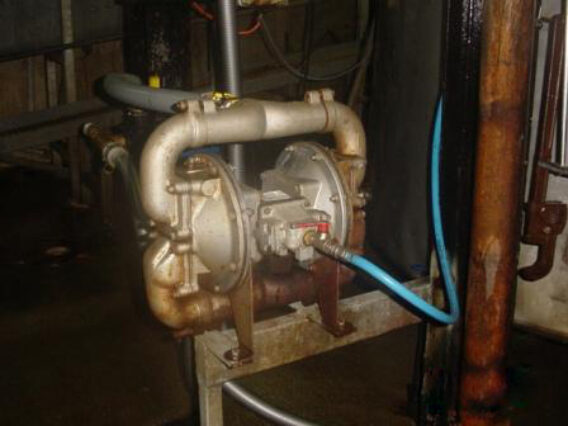
Southern Meats located in Goulburn NSW is a large sheep/lamb abattoir for domestic and export markets. It has been using Sandpiper 50mm SA’s, and now the HDF series flap valve pumps, for many years. According to Scott Newton, Engineering Manager at Southern Meats, the Sandpiper ‘Blood’ pumps (pictured above) have been installed for approximately 7 years and only require a basic service once every 3 or so years. Scott also successfully operates a fleet of 50mm and 75mm Sandpiper flap valve pumps on other waste-type applications at Southern Meats.
Monbeef is an export beef abattoir situated at Cooma in the NSW mountain country. Monbeef has been using a Sandpiper SA2 flap valve pump now for approximately 4 years after having successfully trialled a pump to handle blood and waste. Bob Eley, Engineering Manager at Monbeef became interested after learning about another successful trial of a Sandpiper flap valve pump at a major Australian poultry abattoir/processor.
The problem Bob was encountering was that neither the existing 2” ball valve diaphragm pump, nor the open impeller centrifugal pump, was able to handle the mixture of blood, bone and hoof pieces, and horn buds, without blocking. These blockages were a major problem as they had caused the collection vessel to fill and overflow, as well as requiring a fitter to do the messy job of cleaning out a pump that was full of blood and animal pieces.
According to Bob, since the Sandpiper pump was installed in 2003, blockages have been eliminated and again as at Southern Meats, the pumps require minimal maintenance, only every few years or so.
Other successful installations of Sandpiper flap valve pumps on blood and waste applications at NSW abattoirs include, Gundagai Meat Processors, Gundagai, and Junee Abattoir, Junee.
For further information about the Sandpiper air-powered diaphragm pumps, see Sandpiper under Product > Brands.
[PA34]