Case Study: ABEL Paste Pumping System for Gold Mine Tailings Transfer
Snapshot
- Client: Major Australian gold mine
- Application: High-density paste tailings transfer
- Challenge: Pumping 58–60% solids paste over approximately 750 m at pressures up to 100 bar
- Solution: ABEL HMQ-K-250-1000-U quadruplex diaphragm pump with ABEL high-pressure emergency flushing system
- Key results: Successful transfer to the furthest TSF spigot, automatic operation and control, emergency flushing capability, trained site personnel, and readiness for 24/7 operation
Project Background

A Queensland gold mine operates a conventional Carbon-in-Leach (CIL) processing plant, with tailings thickened to approximately 58% solids before being transferred to a Tailings Storage Facility (TSF) around 750 metres from the paste thickener. The resulting high-density paste is highly resistant to flow, requiring pressures of up to 100 bar to achieve the required transfer rates.
The project emerged during a severe Queensland drought, when reduced access to water from the Burdekin River placed additional pressure on the mine's water supply. Recovering more water from the tailings offered a way to reduce this reliance but also created a demanding pumping application as the tailings became progressively drier and more difficult to handle. A more robust pumping solution was needed, one capable of delivering the required flow and pressure under some of the most challenging paste conditions.
The Challenge
The mine needed a reliable pumping solution to transfer dense, abrasive paste over approximately 750 metres while maintaining stable pressure, flow and paste density. The application became particularly challenging during extended dry periods, when limited access to water from the Burdekin River, approximately 70 km from the mine site, resulted in drier, more cement-like tailings. The existing smaller Albin hose-pump solution was no longer able to reliably handle these changing paste characteristics.
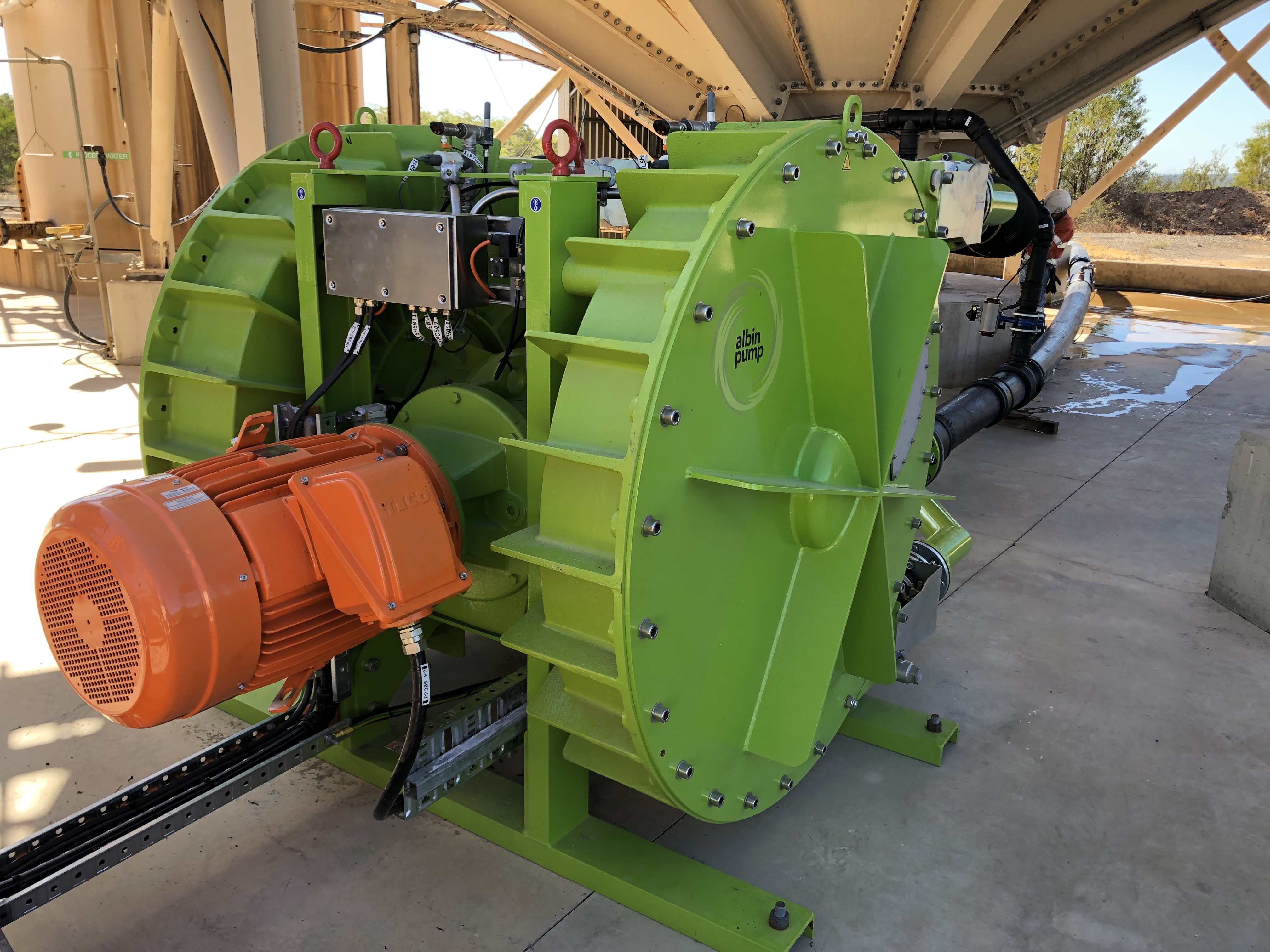
The challenge: a robust positive-displacement pumping solution capable of handling: Dense and abrasive paste Solids concentrations of up to 60% Discharge pressures approaching 100 bar Approximately 750 metres of pipeline Changing paste characteristics during dry periods
The paste is transferred through a pipeline and distributed along the TSF through a network of valves and discharge points. The system was designed for flow rates of approximately 90–115 m³/h at discharge pressures of up to 100 bar. At high solids concentrations, increased paste resistance could raise pipeline pressure and the risk of blockage. Key operating risks included high paste density, pipeline blockage, high discharge pressure, pump or power failure, and leaks or pipeline failure.
- High paste density: Increasing solids concentration increases paste resistance and pipeline pressure. At higher densities, the paste can approach or exceed the practical pumpability limit.
- Pipeline blockage: A blockage can cause pressure to rise rapidly and flow to fall, potentially damaging the pump, pipeline and associated equipment.
- High discharge pressure: With operating pressures approaching 100 bar, reliable pressure control and protection were essential.
- Pump or power failure: If pumping stops, dense paste can remain in the pipeline, increasing the risk of settling, hardening and blockage.
- Leaks or pipeline failure: Unexpected changes in pressure or flow can indicate a leak, pipe failure or developing blockage and require a rapid response.
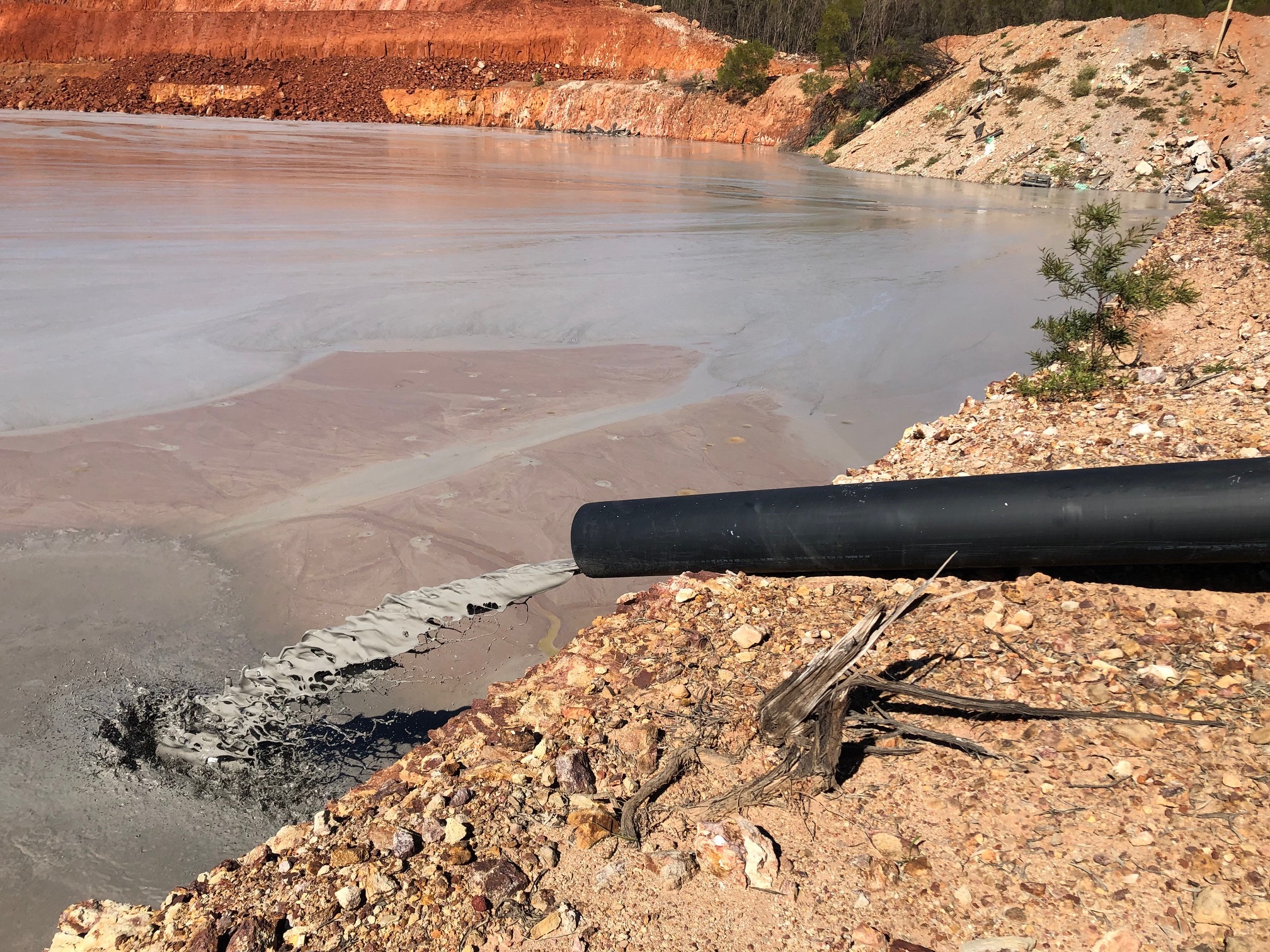
The system also required an independent method of flushing the pipeline if normal pumping was interrupted. Because the application involved high-pressure paste and flushing water, appropriate safety measures and equipment were essential:
- Isolation procedures
- Exclusion zones
- Pressure and flow alarms
- Emergency procedures
- Pipeline flushing capability
The Solution
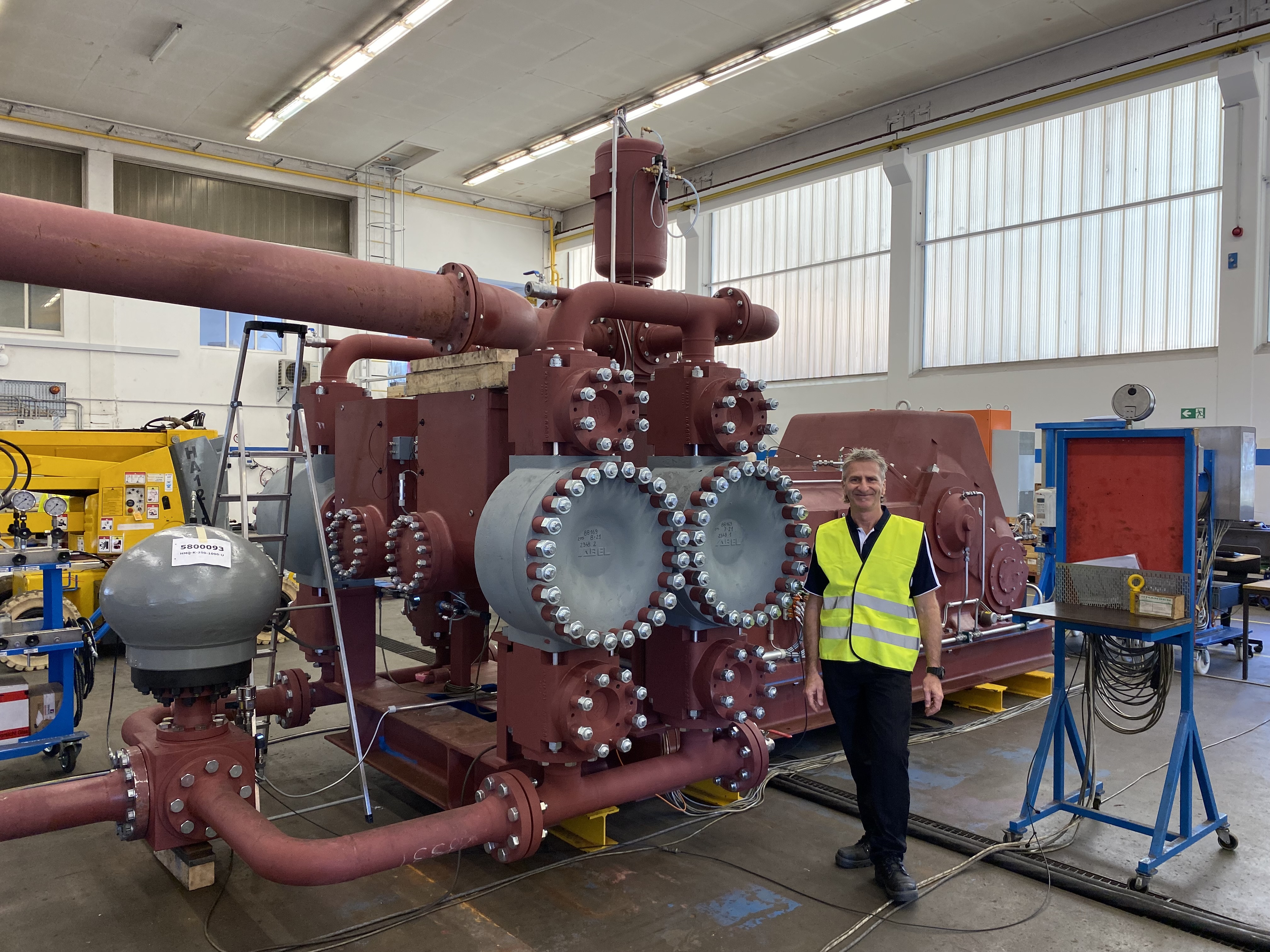
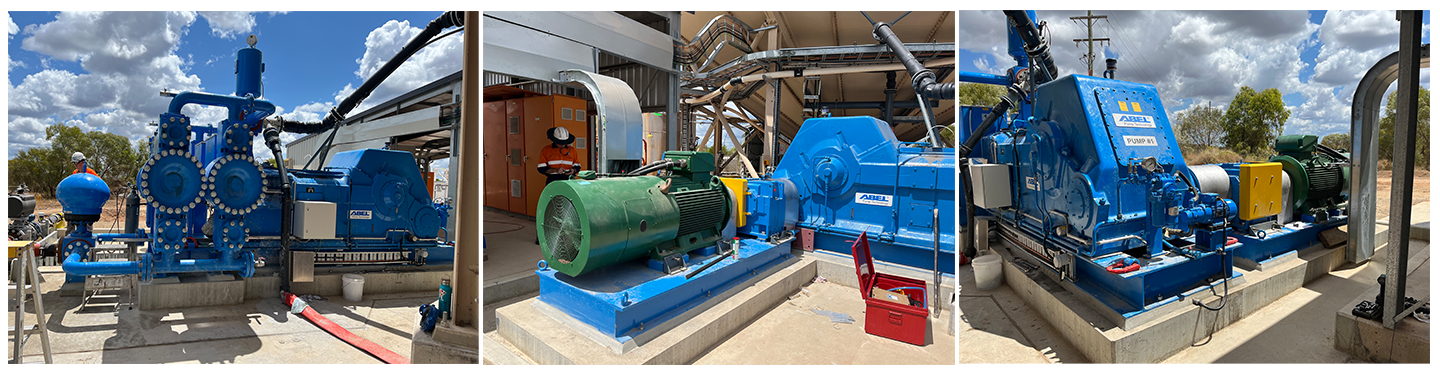
Kelair Pumps supplied an ABEL HMQ-K-250-1000-U quadruplex acting diaphragm pump as the primary paste transfer pump. The horizontal hydraulic diaphragm pump was selected for its ability to handle dense, abrasive and corrosive slurries while providing the high pressure and controlled flow required for the application. Its four diaphragm chambers operate with a staggered 90° crank arrangement, producing comparatively low-pulsation flow at high pressure. The diaphragm arrangement also keeps the abrasive paste separate from the pump’s hydraulic drive components.
The pumping package included a Metso slurry pump to feed the ABEL pump and an independent ABEL high-pressure diesel flushing pump for emergency pipeline flushing. Kelair Pumps assembled and packaged the flushing pump in Sydney. The ABEL pump also incorporated full-stroke safety valves to protect against overpressure and diaphragm rupture monitoring to detect diaphragm failure and automatically shut down the pump. These features provided additional protection under the application’s demanding high-pressure and abrasive conditions.
A key part of the solution was the ability to respond quickly to abnormal pumping conditions before paste could harden or cause a serious blockage. The system used an independent diesel-driven high-pressure water pump for emergency flushing and blockage management, with water dosing available to temporarily reduce paste density. Remote dump/diverter arrangements, including QD2/QD4 valves, allowed controlled diversion to sumps or alternative TSF areas when required. The operating sequence was based on early detection, density control, safe shutdown and pipeline flushing.
- Continuous monitoring:
Pressure, flow and paste density were monitored through transmitters and flow meters integrated with the mine’s PLC/SCADA/HMI system. - Automated protection and response:
The system incorporated pump alarms and trips, automatic shutdown and flushing sequences, CCTV monitoring, emergency response arrangements and TARP-based operating procedures.
During commissioning, the control philosophy was progressively developed and adjusted to establish reliable automatic starting and PID control sequences. The system allowed the ABEL pump to respond automatically to paste density and changing system conditions, reducing reliance on manual intervention during high-pressure, blockage or pump-failure events.
Commissioning and Handover
Kelair Pumps worked closely with the client and ABEL engineers to commission the new paste pumping system. As this was the first ABEL pump of this type supplied in Australia, ABEL engineers attended site to support commissioning and ensure the installation was successfully established. Mechanical checks covered the pump, diaphragms, slurry valves, hydraulic oil, lubrication, motor, air-charge system and emergency flushing pump, with further inspections confirming the major pump components were in good condition.
The electrical, instrumentation and control systems were also tested and refined. Wiring, sensors and an IO-Link module issue were addressed, and PLC programming was modified to support automatic operation. The automatic starting sequence and PID control were developed and successfully tested, allowing the pump to respond to paste density and operating conditions.
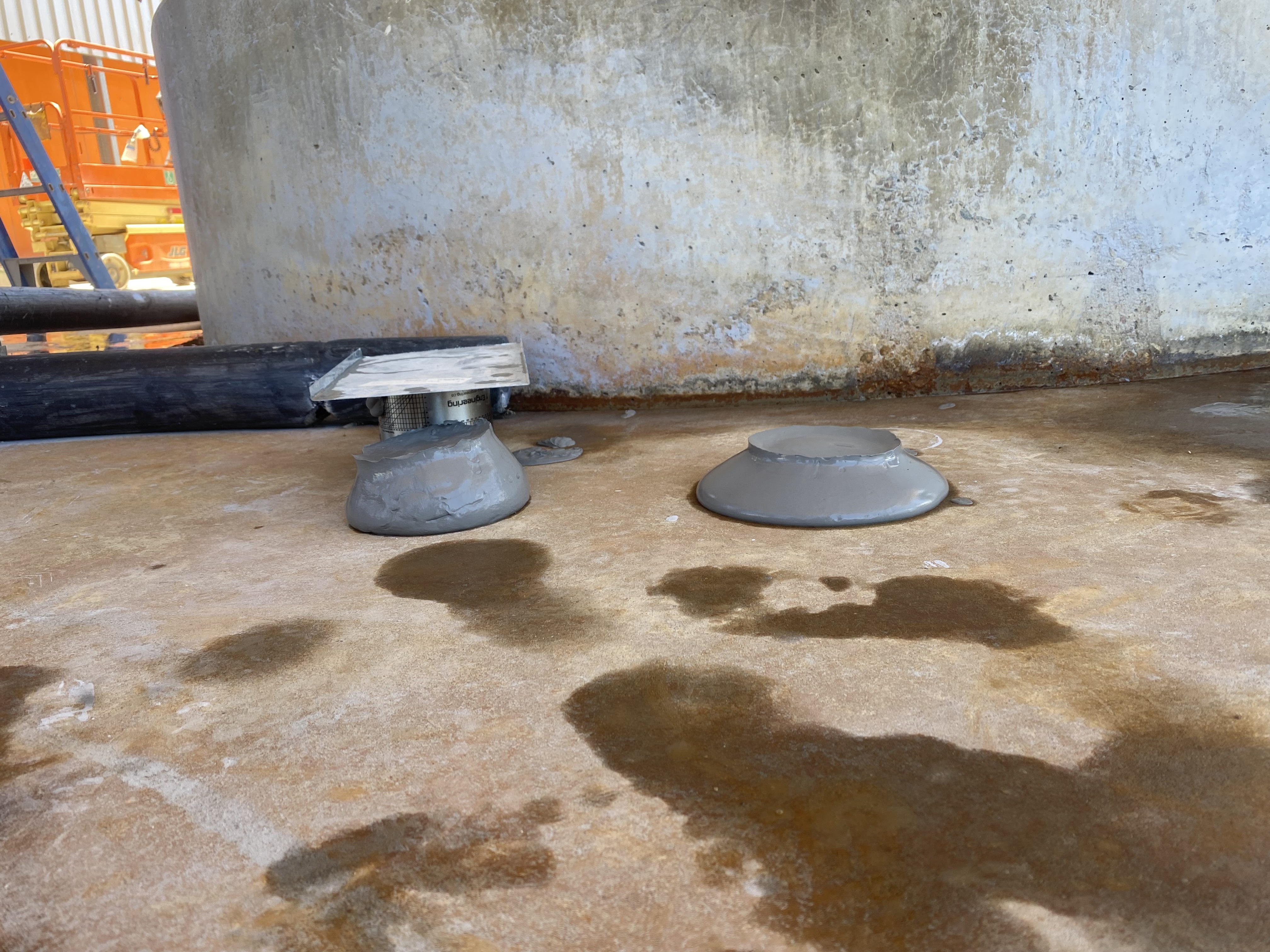
Water and paste testing confirmed smooth operation, efficiency and power consumption, including tests with paste up to 65% solids at different speeds. The system successfully transferred actual paste to both the closest and furthest TSF spigots, with a Victaulic coupling failure during the furthest-spigot test repaired by the team. Emergency shutdown and flushing systems were also tested, and the independent diesel-driven high-pressure water pump was confirmed to provide pipeline flushing following a pump, power or other emergency failure, subject to sufficient water availability.
- Controls and protection: Automatic operation, alarms, shutdown procedures and emergency flushing were tested and implemented.
- Training and handover: Operations and maintenance personnel received practical training covering normal operation, automatic controls, mechanical maintenance, slurry valves, piston assembly and emergency procedures.
The pump was commissioned in September/October 2023. By this time, however, the drought had broken and the immediate need to recover additional water from the tailings had passed. Consequently, the pump has seen relatively limited operation since commissioning and has only been run occasionally rather than at the rate originally intended.
Despite this limited operating history, the installation provides the mine with additional water-recovery and paste-pumping capability should water availability become constrained again during a future prolonged drought.
Results
The ABEL paste pumping system successfully demonstrated reliable, automated transfer of high-density paste through the approximately 750-metre TSF pipeline, including to the furthest spigot, and was considered ready for 24/7 operation following commissioning and testing. The system could operate at the required flow and pressure conditions, with discharge pressures up to 100 bar, while monitoring critical parameters and responding to abnormal conditions through automatic alarms, shutdown and emergency flushing.
The project established the first installation of this ABEL pump type in Australia and provided an important reference for future high-pressure paste transfer applications. Water, paste, control-system and mechanical testing, together with hands-on training, provided confidence in the complete system and equipped mine personnel to operate and maintain it safely.
- Proven performance: Dense paste was successfully transferred to the required discharge locations using automatic start and PID control, with pressure, flow and density monitoring. The independent diesel-driven high-pressure flushing pump provided a backup method for clearing the pipeline following pump or power failure.
- Key operating priorities: As with any high-density paste pumping application, reliable performance depends on maintaining paste density within the preferred operating range, monitor and calibrate pressure, flow and density instrumentation, optimise the emergency flushing arrangement, review alarms, trips and TARP requirements, maintain the ABEL pump and associated equipment, and continue operator and maintenance competency development.
Conclusion
The project delivered a robust solution for a demanding tailings-transfer application, enabling dense, abrasive paste to be pumped at high pressure over a significant pipeline distance. The successful commissioning demonstrated that the system could reliably handle the required paste characteristics and operating conditions, including transfer to the furthest TSF discharge point.
For Kelair Pumps, the project also represents an important milestone as the first installation of this ABEL pump type in Australia. It establishes a valuable reference for future high-pressure paste and thickened-tailings applications across Australia and the wider region.