Cavitation: What's causing it, and how to fix it
Cavitation is one of the most frequently discussed kinds of pump failure in the industry, and also one of the most frequently misdiagnosed. Engineers who encounter it often move quickly to a fix, only to find the problem returns.
The reason is usually the same: the symptoms were identified, but the underlying cause wasn't. By taking a diagnostics-first approach, you can take the time to understand exactly what you're looking at, what it's telling you, and why it's happening.
Why cavitation occurs
The mechanism behind cavitation is straightforward. When the pressure of flowing liquids drops to, or below, the liquid's vapour pressure, the liquid boils and vapour cavities form locally inside the liquid.
If the pressure within the flow path subsequently increases above the vapour pressure, the vapour cavities implode and release energy. It's that implosion, occurring repeatedly against solid metal surfaces, that causes the pitting and erosion described above.
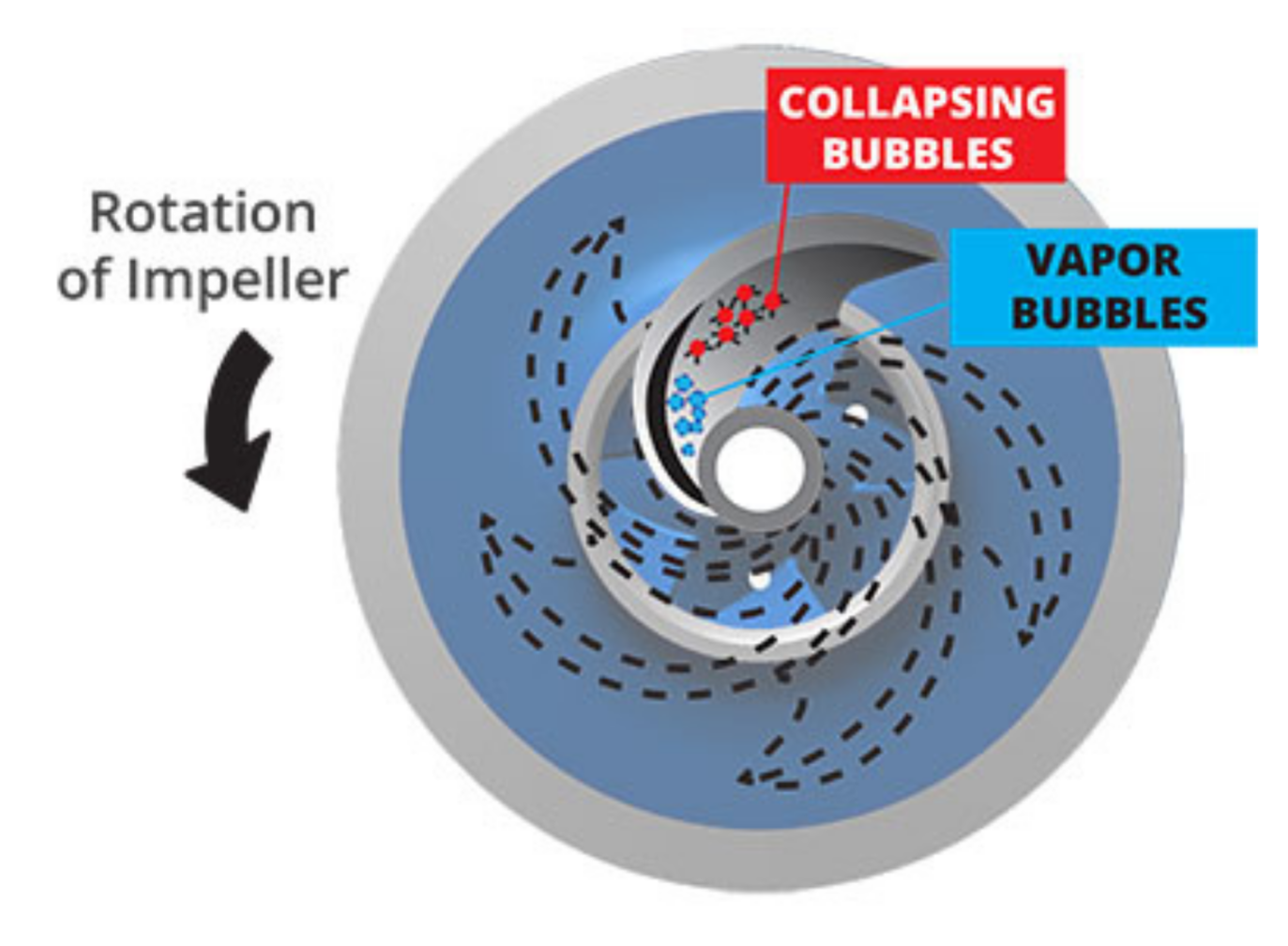
There are two main reasons the pressure inside a pump drops low enough for this to happen. The first is insufficient pressure on the suction side, where the net positive suction head available (NPSHa) falls below what the pump requires. The second is running the pump well below its designed flow rate, causing casing recirculation.
Classic cavitation damage due to inadequate NPSHa will appear on the visible low-pressure side of the impeller vanes. Recirculation cavitation damage appears elsewhere, and the noise from recirculation will be similar to cavitation noise but is more random in character. Typically, recirculation noise will reduce as the flow is increased, whilst classic cavitation noise will normally increase with higher flows.
This distinction matters because both mechanisms cause similar damage but require different responses; treating one as the other typically doesn't resolve the problem.
3 signs of cavitation to look out for
The first sign most operators notice is sound. The presence of cavitation due to inadequate net positive suction head (NPSHa) can be diagnosed during pump operation by a steady crackling noise in and around the pump suction. It's commonly described as a gravel-like sound, as though solids are passing through the casing. This is often the earliest warning available, though by the time it's audible, damage may already be well underway.
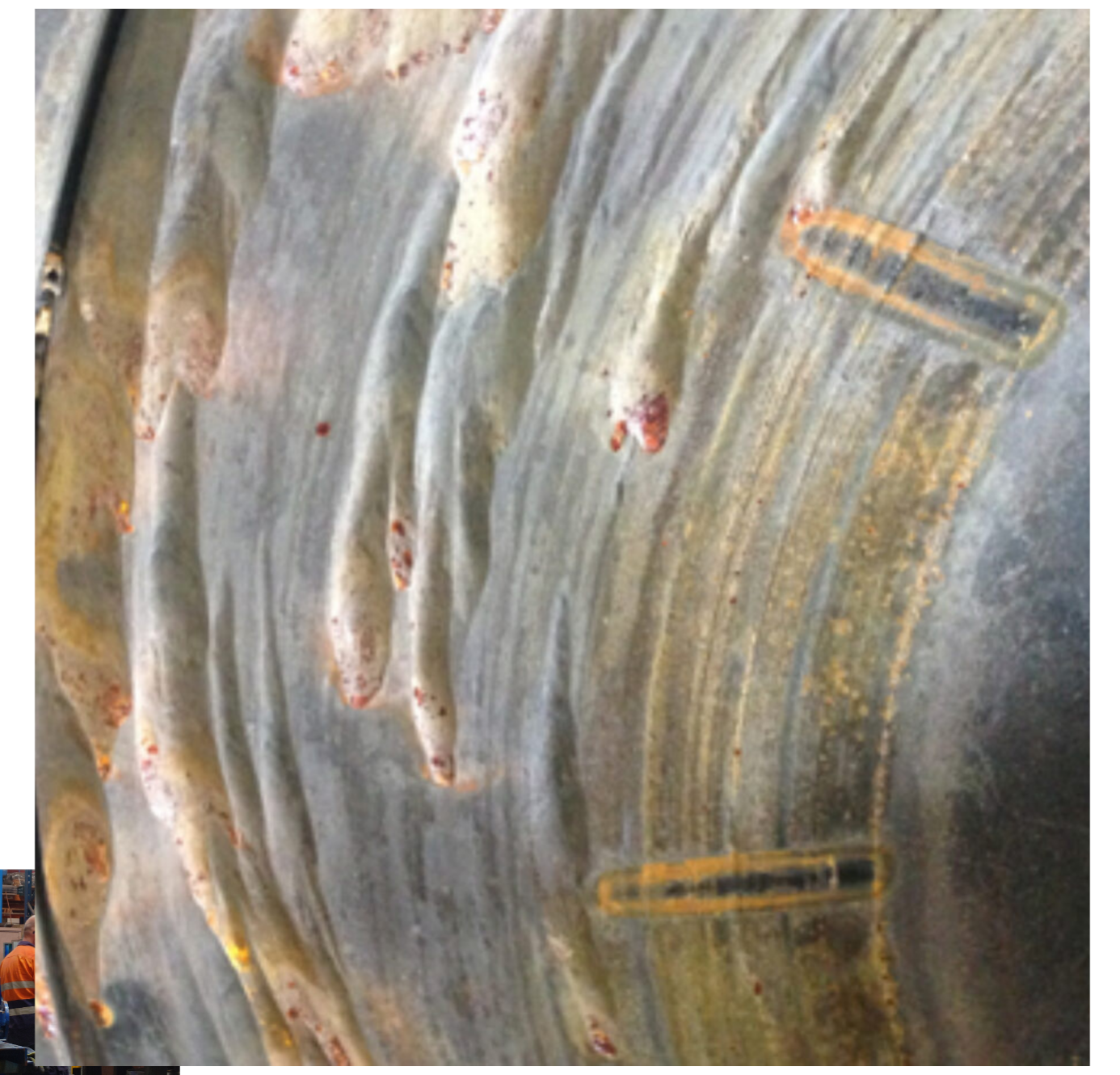
The second sign shows up on inspection. When cavitation occurs repeatedly, it can cause pitting and fractures in the impeller, volutes and casing, weakening the metal, increasing resistance to flow and reducing pumping efficiency. On a worn impeller, this damage is visible as a roughened, cratered surface and, over time, the worn impeller will permanently affect the pump's ability to operate on its curve.
Pump performance is the third sign to look out for. A cavitating pump can deliver less flow and pressure than it should, and readings can become unstable. The vapour bubbles in the flow stream take up more space than the process liquid, causing the pump performance to change while it's cavitating. If flow and pressure instrumentation is showing inconsistent readings with no obvious system change, cavitation is worth investigating.
Finding the actual cause of cavitation
To find the root cause of cavitation, start by checking whether the pump is running at or near the flow rate it was designed for. A pump that is operating too far away from its best efficiency point will result in unnecessary power consumption, higher energy costs and potential cavitation.
If the pump has been oversized for current process demands, or if system conditions have changed since commissioning, the operating point may have shifted significantly without anyone specifically accounting for it.
However, if the operating point looks correct, investigation moves to the suction side. Pipe length, the number of bends and fittings, valve positions, and suction lift all affect the NPSHa available at the pump inlet.
Fluid temperature also plays a larger role than many operators expect. As temperature rises, vapour pressure increases and the margin between NPSHa and the pump's NPSHr narrows, even with no other change in the system. A pump that runs without issue through winter may begin cavitating in summer for this reason alone.
The diagnosis comes first
Cavitation is a symptom of a hydraulic mismatch, not a fault in itself. The observable signs in the field, the damage pattern on the impeller, and the results of an NPSHa calculation should all point to the same root cause.
If you're working through a cavitation problem and want a second opinion before committing to a repair or modification, the Kelair team is available to help.