Mine Pumps to Order
Kelair Pumps Australia has innovative mining pumps and is candid about their products’ durability, adaptability and customisation.
“We build pumping solutions and customise to what the customer requires,” they said.
With the market calling for high performing and service-friendly pumps, Kelair Pumps approached numerous mining sites and customers all over Australia and asked specifically what their wish-list comprised, then poured over 40 years of experience into custom configured pumps that moulded to the specified requirements of their clients.
Pleasing one customer does not however guarantee the approval from others.
Speed, efficiency and reliability of pumps are paramount to the smooth running of systems at any operation. Understanding the application of the pump or a series of pumps at a mine site comes down to knowing the nature of the fluid – its rheology, are there solids present, as well as calculating out the system or friction head losses including distance, gradient and height.
Pump flexibility on chemicals
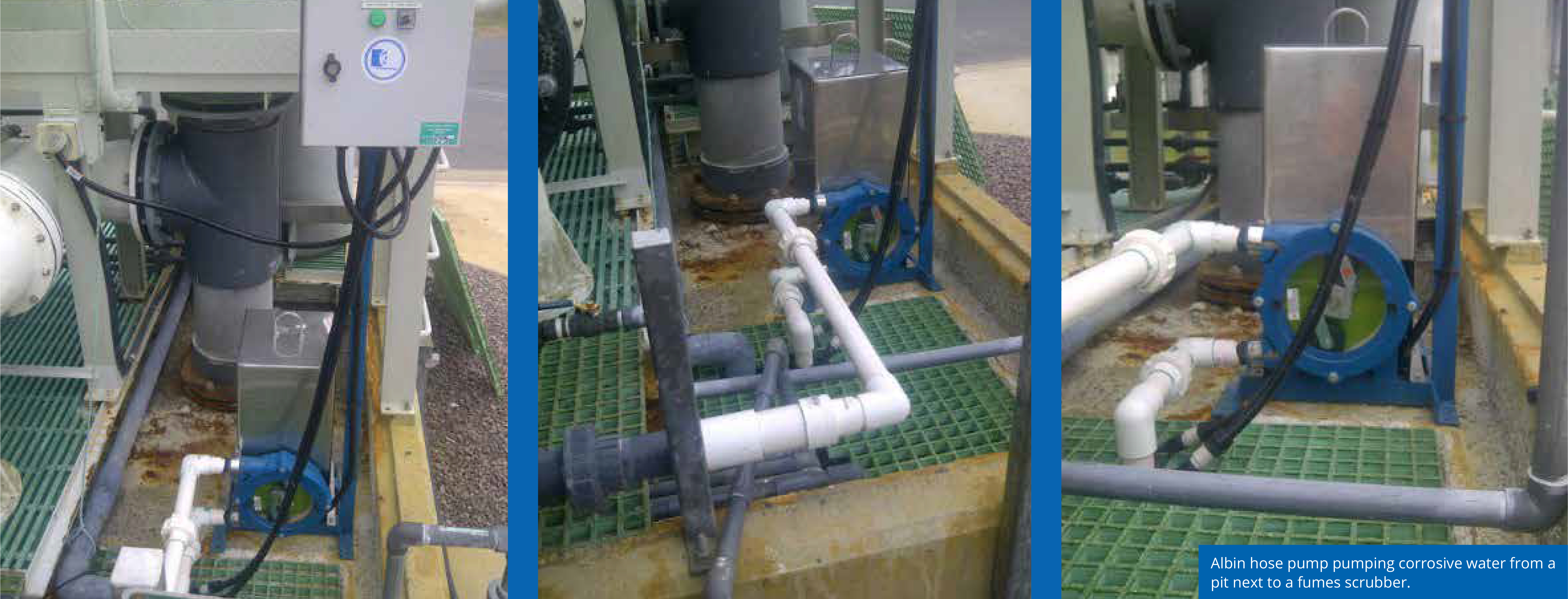
If a fluid is corrosive or hazardous, there are options including the use of exotic alloys, plastics and other compatible materials as well as paying particular attention to how the pump is sealed to prevent product leakage to the environment and potential risks to personnel.
The applications duties also will vary greatly depending upon the nature of the process. High flow rates may necessitate the use of centrifugal pumps.
For high-speed chemical duties, we may need to call upon the use of ITT Rheinhutte range which includes lined polymer centrifugal pumps with an array of mechanical shaft seal options. These are typically seen in the production of acid created through the smelting process, fertiliser production, large fume scrubbers and metal pickling plants. ITT Rheinhutte pumps can be configured as inline, horizontal end suction and vertical column style for sumps. Kelair Pumps Australia took on the sole agency for Rheinhutte in January 2021.
If the client desires a sealless offering for thin liquids, Kelair has available the HMD/ANSIMag range which covers wetted materials in 316 Stainless steel, Alloy 20 for the HMD series and also Polymer lined casing options with ANSIMag.
Where low flow and greater accuracy is required for chemical application, Pulsafeeder comes to the fore.
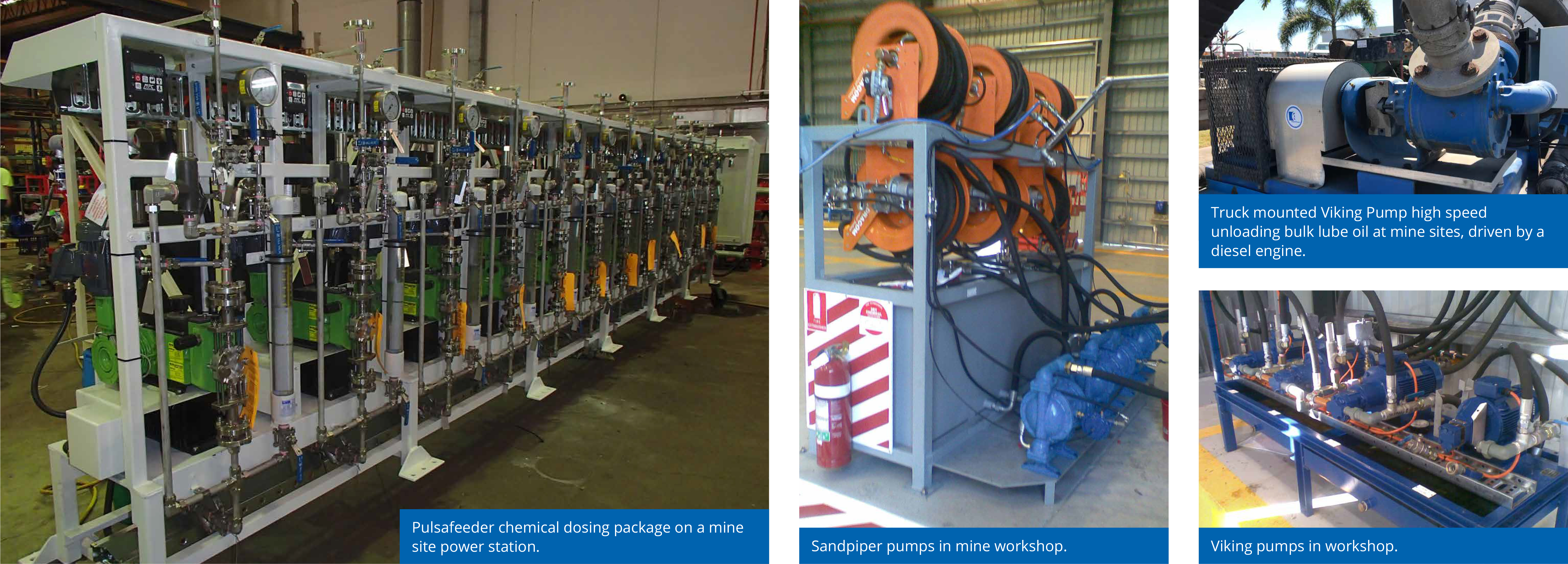
The PulsaPro range from Pulsafeeder is the product of choice for accurate metering and dosing. PulsaPro are positive displacement reciprocating metering pumps that combine the high efficiency of a plunger pump with the sturdiness of a diaphragm seal to eliminate leakage. They provide maximum accuracy and repeatability. Available in a wide range of materials and diaphragm designs, the PulsaPro offers the user diverse range of fluid handling solutions.
Where lower accuracy and a higher flow rate may be the norm for an aggressive/corrosive liquid, Pulsafeeder have the Eclipse range of sealless mag-drive, rotary gear pumps in both metallic and non-metallic construction.
The Eclipse Series represents a dramatic advance in pump technology. Combining proven design principles and a wide array of material options, the Eclipse Series is the most reliable, simple, and intuitive pump on the market today. Structurally rugged with corrosion-resistant materials, the Eclipse is an ideal fit for many medium to highly corrosive liquids used in chemical processing.
Pump flexibility on fuels/oils/hydrocarbons/coolants/waste oils
Every mine site operates heavy machinery which require fuel, lubricants and coolant. This is all maintained in by a heavy machinery workshop located at site. All of the liquids mentioned are typically delivered in bulk form. That can be a b-double road tanker for diesel fuels to bulk containers for oils and other lubricants, as well as anything sized in between.
Mine site fuel and lube farms have been the home for Kelair Pumps products for decades now.
High speed road tanker diesel unloading is traditionally done with sliding vane pumps and Kelair has over the years provided hundreds of Corken sliding vane pump packages to mine sites all over Australia and PNG. The trick with road tanker unloading is to do this quickly with a low power requirement and the Corken does this very well.
We continue to provide new Corken pump packages and service existing installed units today to many satisfied clients.
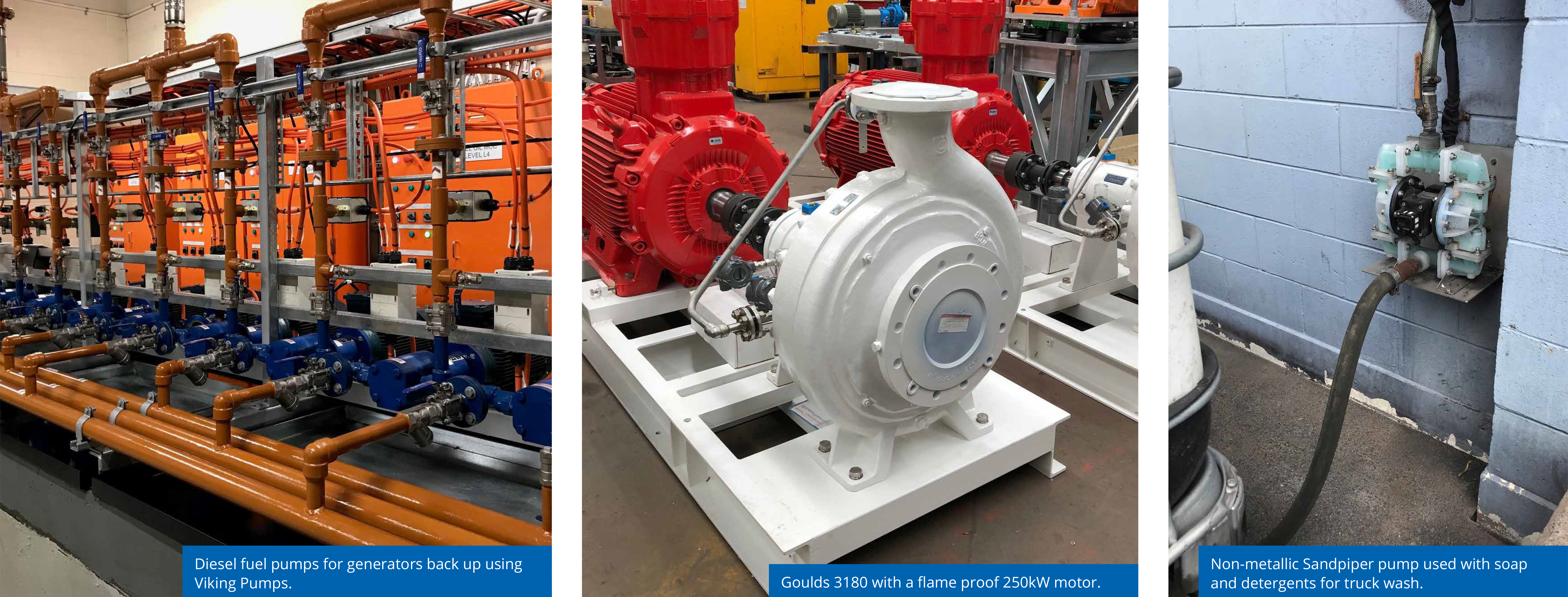
Mine site lubricant transfer is one that Kelair is very proud to have a dominant position in the Australian mining market with the Viking Gear Pump. Viking is the world leader in gear pump technology. No other brand has the number of available options as Viking do. Ranging from standard ‘box’ product though to custom configured, Viking has it all in its product line.
We also see Viking pump on crushing plants as OEM equipment for their gear lubrication systems. We’ve also seen a spike in the use of Viking internal and spur gear pumps being used on oil filtration ‘kidney loop’ systems which are designed to filter out contaminants and increase the life of the lubricant used in large mining plant gearboxes and vehicle differentials.
These Viking pumps have a very hard life in service and do it extremely well.
To increase equipment up time, many mine sites employ integrated predictive maintenance programs such as an "F-1 pit stop approach" to servicing their haul trucks and other heavy equipment. Machines come into the workshops hot. The lubricants and coolant are pumped out and replaced. We see Viking pumps used to deliver the clean, new lubricants to the machines and air powered diaphragm pumps like our Sandpiper used to remove the used oil and transport it back to waste storage.
Sandpiper Diaphragm pumps are widely used in workshops for handling glycol coolant. These would typically be non-metallic constructed pumps as would be the Sandpiper’s be that are used on detergents such as truckwash.
Pump flexibility with repairs and maintenance
Correct selection of pumps for the application is important. Understanding the pumping system at the time of pump selection is critical, particularly when we see pumps are damaged through the process called cavitation.
When a pump is under low pressure or high vacuum conditions, suction cavitation occurs. If the pump is "starved" or is not receiving enough flow, bubbles or cavities will form at the eye of the impeller. As the bubbles carry over to the discharge side of the pump, the fluid conditions change, compressing the bubble into liquid and causing it to implode against the face of the impeller. Creating minute shockwaves.
An impeller that has fallen victim to suction cavitation will have chunks or small pieces of material missing from it, causing it to look a bit like a sponge. Damage to the impeller appears around the eye when suction cavitation is present.
Cavitation is a common problem in pumping systems, but with proper pump sizing, pipe design, and careful use of filters and strainers, damage to pumps and their impellers can be largely avoided.
“When we see pumps that are damaged onsite, quite often we prefer to repair them because it may take less time than supplying a new pump, and secondly the repaired pump is as good as or better than the pump originally was.
We can make improvements to the mechanical seals. Diagnose problems, so we can go to the customer with something which is much more reliable, which is typically below the cost of a new pump.