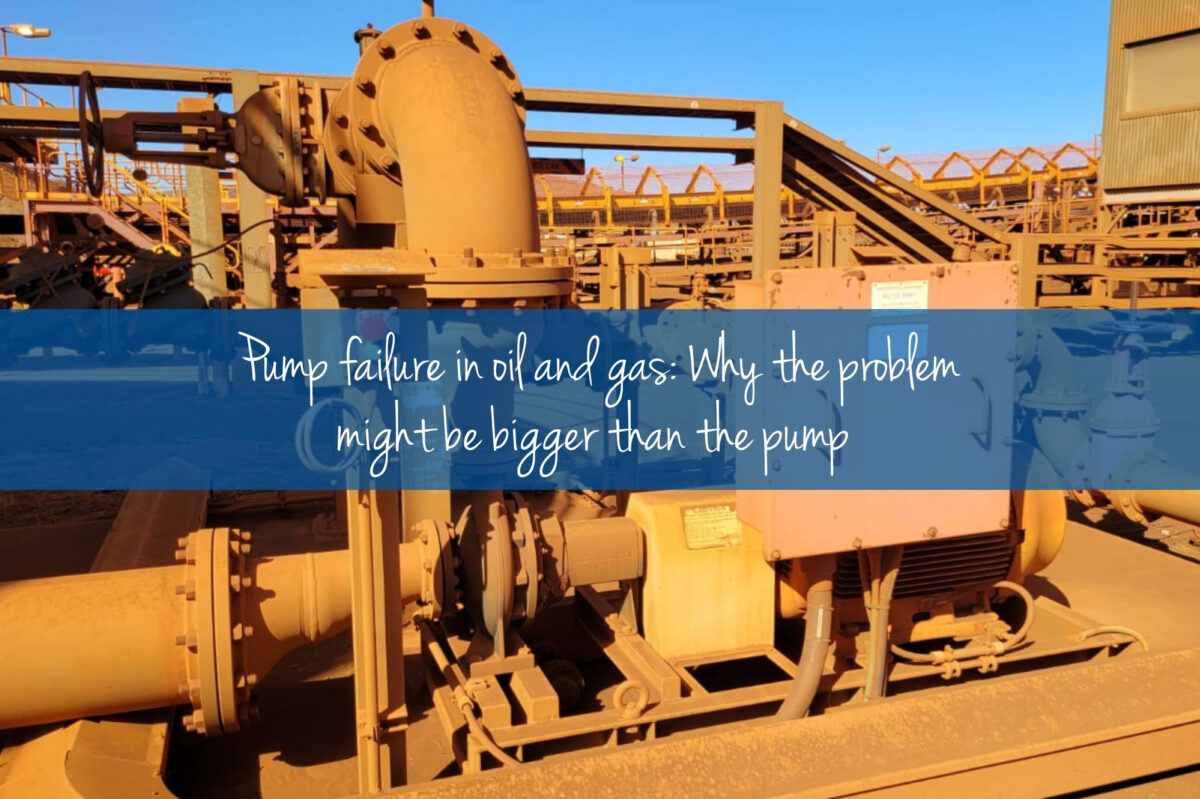
Pump failure in oil and gas: Why the problem might be bigger than the pump
Have you ever been in a situation where a pump needs repair or replacement, only for the same failure to occur again? In demanding oil and gas applications, it might be tempting to blame the conditions or the pump itself – but often, repeated failure can be a symptom of wider system or application problems.
When downtime is costly and pumping systems are supporting critical processes, replacing a failed component may solve the immediate problem without addressing the reason it failed in the first place.
The pump may not be the only problem. Rather, it may simply be one part of the system telling you that something else needs attention. In this article, we’ll break down why looking at the whole system is important when analysing why pumps fail.
The importance of correct pump selection in oil and gas
One of the most important elements in preventing recurring pump failures is matching a pump to the specific application, which is particularly critical in demanding industries like oil and gas.
Heavy-duty processing environments can involve abrasive slurries, high solids content, fluctuating flow requirements, harsh installation conditions and remote locations. Oil and gas applications can introduce specific challenges, including hydrocarbons, chemicals, temperature and pressure requirements, hazardous area considerations and demanding reliability expectations.

As such, selecting the right technology requires consideration of factors such as:
- What fluid is being pumped, and what is its viscosity and temperature?
- What is the solids content and particle size?
- How frequently will the pump operate?
- What installation and maintenance constraints exist?
- What compliance or site-specific requirements apply?
For example, a pump selected without properly considering abrasive solids may experience excessive wear. A pump operating away from its intended duty point may suffer reliability or efficiency problems. In another application, unsuitable materials could contribute to premature component failure.
This is why pump selection should begin with the process and operating conditions, not simply the pump catalogue. Our application-first approach reflects this principle: understanding the fluid and process, identifying the risks, and selecting appropriate technology for the system it will perform in.
Pump failure can be a symptom, not the only problem
Recurring issues can indicate that a pump is operating outside the conditions it was intended for, meaning failures are likely to keep appearing.

Cavitation, leakage, seal failure, excessive wear, blockages, dry-running damage and unstable flow or pressure can all have multiple contributing causes. A failed seal, bearing or other component therefore does not necessarily tell the whole story. It is a piece of the puzzle.
The investigation needs to consider what was happening before the failure. It’s important to ask questions like:
- Was the pump correctly sized?
- Has the duty changed since the original installation?
- Are the work conditions different from the original design assumptions?
- Has the system configuration changed?
- Is the pump being operated in a way that takes it away from its intended duty point?
These questions are particularly important in oil and gas environments, where operating conditions can change and the consequences of unreliable equipment can extend well beyond maintenance costs.
Compliance is also a factor and, depending on the application, equipment may need to satisfy relevant Australian Standards, site requirements, hazardous-area classifications or other regulatory obligations.
Our knowledge base specifically identifies compliance requirements, motor and hazardous-area classifications and applicable standards as information that should be verified during pump selection rather than assumed.
We also maintain ISO 9001:2015, ISO 14001:2015 and ISO 45001:2018 certifications, which form part of our broader commitment to quality, environmental and occupational health and safety management.
Taking a holistic look at pumping systems in demanding applications
Solving recurring pump problems in oil and gas requires looking beyond individual pieces of equipment and considering the entire application.
A useful starting point is to review the following three pieces of information:
- Revisit the original selection: Understand why the pump was selected in the first place. What duty was it designed to meet? What assumptions were made about the fluid, flow, pressure, temperature, solids and operating cycle?
- Assess the actual operating conditions and modes of failure: Compare the original requirements with what is happening in the field today. Changes to the process, fluid characteristics, operating hours, pipework or control strategy can all affect pump performance.
- Investigate the failure history: Look for patterns rather than isolated events. If seals are repeatedly failing, bearings are wearing prematurely or pumps are regularly experiencing cavitation, the recurring nature of the problem may provide the most useful diagnostic information.
From there, the solution may involve changing the pump, modifying the system, adjusting operating conditions, improving controls, changing materials or establishing a more appropriate maintenance strategy.
Although it’s simple to think the answer might be a different pump or system, taking the time to gain a better understanding of the relationship between the two can future-proof both your pump and the operation it’s part of.
Encountering pump problems? Get in touch
In demanding applications, reliability cannot be separated from application suitability.
We support customers with pump selection and application advice, engineered pump systems, pump packages, testing, commissioning, preventative maintenance, repairs and ongoing service. Our team’s national network and local workshops provide support across the operating life of pumping equipment.
If your oil or gas pumping system is experiencing recurring problems, it may be time to look beyond the failed component. When pump knowledge matters, start with the system, not just the pump; get in touch with our team!