The Role of Variable Speed Control in Fire Protection Systems
Traditional fire pump systems are designed with the worst-case demand in mind. In these systems, the pump needs to deliver duty flow at duty pressure at the most unfavourable conditions it might ever see, driving engineers toward fixed-speed selection from the start.
In practice, this creates challenges. Under fixed-speed operation, pressure can rise significantly at low or no flow. For building owners and operators, this can mean unnecessary system stress, compliance risk, and challenging commissioning, especially in taller buildings or complex networks.
In this article, we explain how variable speed control pumping systems operate in fire protection in the context of AS2941, and how they help maintain stable system performance during emergency conditions.
Why Fixed Speed Fire Pumps Struggle with AS2941 Pressure Limits
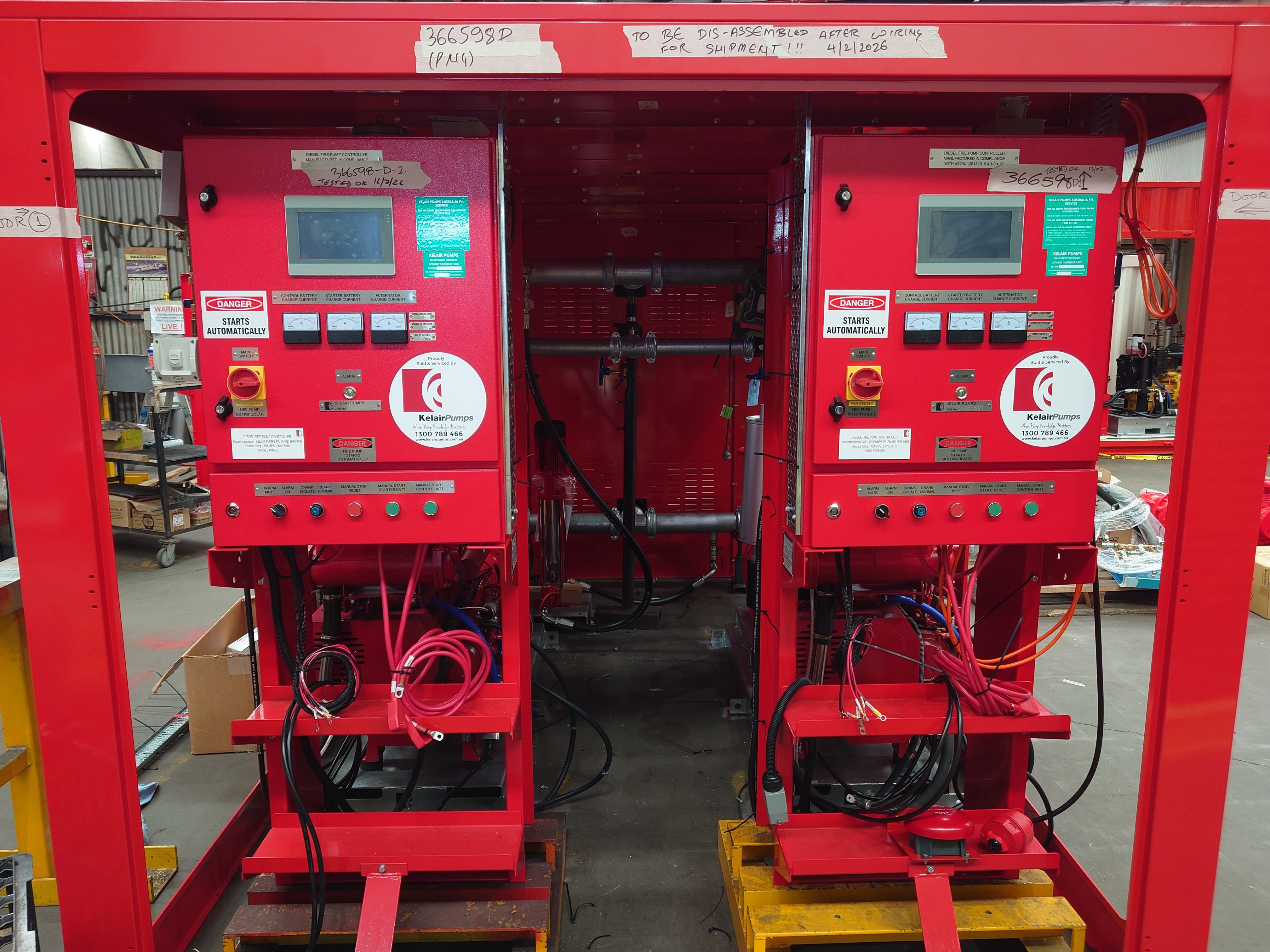
For hydrant pump systems, AS2941 - the Australian Standard for fixed fire protection pump set systems installations - limits pressure at no flow (dead head) to 140% of the duty pressure. Under fixed-speed operation, it is common for the pump to approach or exceed this limit at shut-off.
Historically pressure relief valves (PRVs) were commonly fitted to the pump discharge below the discharge non-return valve to manage over-pressurisation. However, the latest edition of AS2941 no longer permits PRVs to be used for this purpose.
Where excessive pressure cannot be reduced by hydraulic re-design – for example in high-static-pressure sites or systems with large elevation differences – variable speed control becomes a key tool to meet both hydraulic and compliance requirements.
This change has forced many projects to rethink their fire pump strategy, particularly:
- Mid- to high-rise commercial and residential towers
- Industrial facilities with mixed hydrant and sprinkler demand
- Mining and campus-style sites with long distribution mains
How Variable Speed Control Fire Systems Operate
A variable speed drive (VSD) is the main way that a pump modulates speed in response to system pressure.
Because centrifugal pump pressure varies with the square of its speed, relatively small speed changes produce meaningful pressure adjustments, which gives the control system a responsive tool for maintaining stable discharge pressure across a wide range of conditions.
Speed, Pressure, and Control Logic
The controller reads pressure from sensors on the pump discharge, adjusting driver speed to hold a setpoint pressure. When demand drops, the pump slows. When the suction pressure falls under heavy flow, it speeds up.
This makes VSD control particularly effective in multi-storey buildings, where maintaining consistent pressure across multiple floors is challenging, as well as in dual-purpose combined hydrant and sprinkler systems.
Where pressure relief valves are passive and reactive, VSD controllers actively manage pump speed before over-pressure develops. However, these systems still require a pressure relief valve as a backup safeguard if the drive fails, and the pump reverts to full speed. This recognises that while VSDs are reliable, they can’t yet replace mechanical safety devices in a real-life safety application.
Controllers, Pressure Sensors, and Redundancy
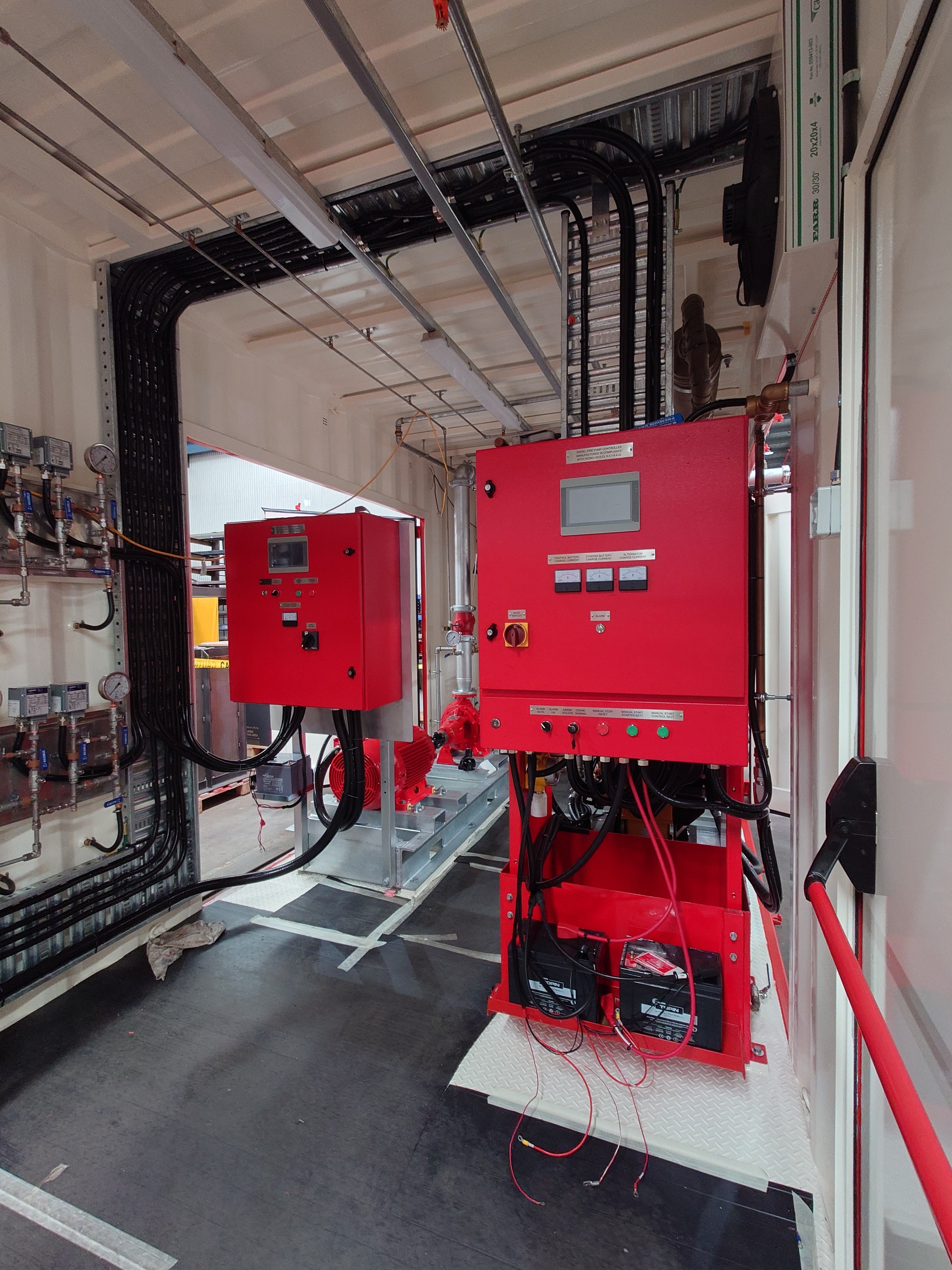
For a life safety system, fail-safe behaviour is critical.
If variable speed control fails, regulations require that the system default immediately to a minimum constant speed. This fail-safe pathway must be tested and maintained just as rigorously as the variable speed mode. In practice, this means:
- Clear logic in the controller for detecting VSD faults
- Automatic reversion to the pre-defined constant speed mode
- Regular function testing as part of ongoing maintenance
The benefits of VSD-based control extend beyond pressure stability:
- More stable discharge pressure from no flow through to duty pressure
- Reduced mechanical stress through controlled soft starting and lower average speeds
- Extended equipment life, since hydraulic forces on the impeller reduce with the square of speed, so lower average operating speeds can meaningfully extend bearing and seal life
From an electrical perspective:
- Electric motors must be suitable for frequency inverter service.
- Drive cooling and enclosure ratings also need to be factored into pump room design,
This is particularly in Australian industrial and mining environments, where ambient temperatures can be significantly higher than typical commercial plant rooms. In these conditions, drive derating, ventilation, and enclosure protection all become critical design decisions.
Compliance, Standards, and Application Suitability
In Australia, there are several options for variable speed drive fire pump controllers designed specifically to meet AS2941 and related strict safety requirements.
Variable speed control fire pumps suit applications with variable demand profiles, such as:
- Mid- to high-rise commercial buildings
- Industrial facilities with mixed sprinkler and hydrant demand
- Campus-style facilities with distributed buildings and long ring mains
- Sites with high static pressures or significant elevation differences
Meanwhile, simpler systems with uniform demand, for example single-storey building with straightforward hydrant systems, don’t require this added complexity, and adding it often offers little benefit.
Navigating State-by-State Interpretation
Early engagement with the system designers, certifiers, and approving authorities is essential. Interpretations of regulations can vary between Australian states.
TIP: Get concept approval for your fire pump strategy before committing to equipment selection and detailed design. This can avoid costly late-stage redesign and re-submission.
Is a Variable Speed Fire Pump Right for Your Application?
When properly designed, installed, and approved variable speed control fire systems offer tangible operational and mechanical advantages:
- Stable pressure control across a wide range of flows
- Improved compliance with AS2941, AS2419, AS2119 pressure limits
- Reduced system stress, with smoother start-up and lower peak pressure
- Potential longer equipment life, with reduced wear on seals, bearings and pipework
For asset owners, facility managers and designers, this translates into:
- More predictable system performance at commissioning
- Reduced risk of over-pressurisation issues and remedial works
- Greater confidence in meeting compliance obligations over the system’s life
Successful implementation requires careful attention to:
- Equipment selection (pump, driver, VSD, and controller)
- Electrical supply sizing and coordination
- Drive cooling and enclosure protection in local environmental conditions
- Pressure relief valve provision for fail-safe operation at full speed
- The full-speed fail-safe pathway and its testing regime
Talk to Kelair Pumps About Variable Speed Fire Pump Systems
Kelair Pumps, part of the AxFlow Group, supplies both fixed and variable speed fire pump systems for commercial, industrial and mining project across Australia. Our team works with consultants, fire system designers, and contractors to match pump configurations, controllers and VSDs to specific requirements to AS2941 and local authority interpretations.
Get in touch with the Kelair Pumps team to assess whether a variable speed control fire pump system is right for your building or site.