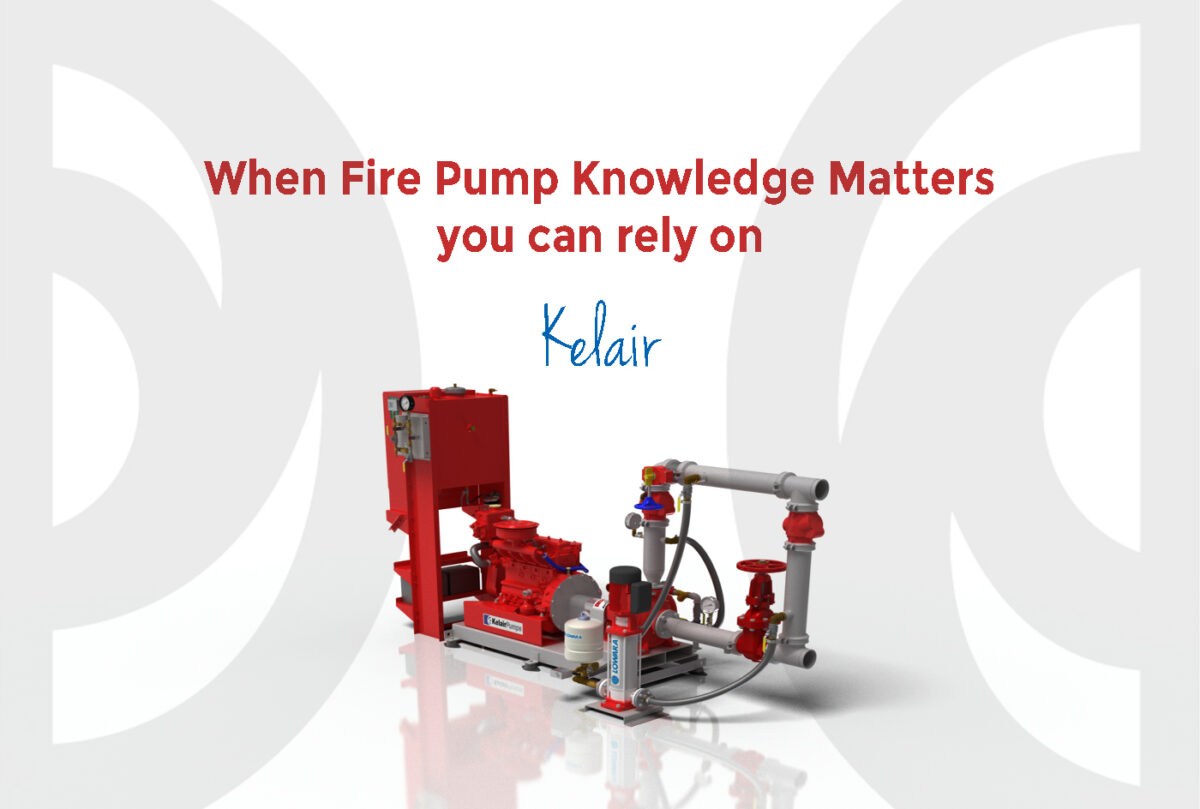
When Fire Pump Knowledge Matters you can rely on Kelair
What is a Fire Pump?
Fire pumps are specialized devices designed to increase water pressure and flow within a fire protection system. They play a crucial role in firefighting, as they ensure that an adequate water supply is available to combat fires effectively. The pump is powered by a motor and includes components like pressure switches, suction lines, and backflow preventers. Fire pumps are typically electric or diesel-driven.
Once activated, the fire pump draws water from a storage tank or other source and distributes it at high pressure to fire protection systems through a network of pipes, where it will then be dispensed onto the fire.
Are fire pumps necessary in your facility?
In Australia, fire pumps must comply with a range of legal requirements and standards. This article will provide an overview of the different types of fire pumps, discuss the specific requirements and regulations, and offer guidance on the selection, installation, and maintenance of fire pumps.
Where are Fire Pumps Used
Fire pumps are located in water systems where the local municipal facilities are not equipped to provide sufficient pressure. Fire Pumps are used in buildings such as apartment blocks, hotels and hospitals. They are also used in systems that require high terminal pressure from the fire sprinkler to provide a large volume of water, such as those required for storage warehouses. They play a crucial role in ensuring that a reliable and sufficient water supply is available for firefighting.
Some common places and applications where fire pumps are used:
- Centre's: Fire pumps are commonly installed in commercial structures such as office buildings, hotels, shopping malls, and restaurants to provide adequate water pressure for fire sprinkler systems.
- Industrial Facilities: Manufacturing plants, chemical processing facilities, refineries, and warehouses utilize fire pumps to protect assets and personnel from potential fire hazards.
- Warehouses and Distribution Centre's: Large storage facilities and distribution canters often have fire pumps to safeguard valuable inventory and assets.
- Data Centre's: Data canters rely on fire pumps to protect sensitive and expensive equipment from fire damage.
- Hospitals and Healthcare Facilities: Fire pumps are essential in hospitals and healthcare facilities to ensure the safety of patients, staff, and critical medical equipment.
- Airports: Fire pumps are installed in airport terminals and hangars to provide firefighting capabilities in the event of aircraft fires or other emergencies.
- Power Plants: Power generation facilities, including nuclear, coal, natural gas, and renewable energy plants, use fire pumps to protect equipment and prevent fires that could lead to power outages.
- Oil and Gas Industry: Both onshore and offshore oil and gas facilities utilize fire pumps to combat fires that may occur during production, drilling, or processing operations.
- Mining Industry: Mines require fire pumps to protect personnel, machinery, and infrastructure from fire hazards in challenging environments.
- Marine and Offshore Applications: Ships, offshore platforms, and marine vessels use fire pumps to handle fire incidents at sea.
- Residential Buildings: Some larger residential buildings, such as high-rise apartment complexes or gated communities, may have fire pumps to enhance their fire protection systems.
- Military Installations: Military bases and installations use fire pumps to protect their facilities, equipment, and personnel.
- Educational Institutions: Schools, colleges, and universities may have fire pumps to ensure fire safety for students and staff.
- Museums and Cultural Institutions: Museums and cultural facilities often employ fire pumps to protect valuable artworks, artifacts, and historical collections.
- Hotels and Hospitality: Hotels and resorts commonly use fire pumps to ensure guest safety and protect property assets.
- Stadiums and Sports Arenas: Large sports and entertainment venues may incorporate fire pumps into their fire protection systems.
- Government Buildings: Federal, state, and local government buildings may have fire pumps to safeguard government assets and operations.
Different Types of Fire Pumps
Electric Fire Pumps: These pumps are driven by electric motors and are commonly used in buildings where a reliable power supply is available.
Diesel Fire Pumps: These pumps are driven by diesel engines and are often used in facilities when electricity not available or electric power supply. They are also commonly used in remote or industrial settings.
Jockey Pumps: Jockey pumps are small pumps that maintain the pressure in the fire protection system by compensating for minor leaks and pressure drops. They work in combination with the main fire pumps.
There are several types of fire pumps designed to meet various firefighting and fire protection needs. These pumps differ in terms of their power source, configuration, and application. Below are some of the most common types:
1. Horizontal Split Case Fire Pumps:
•These pumps have a horizontally split casing, which allows for easy access to internal components for maintenance and repairs.
•They are typically used in larger commercial and industrial applications where high flow rates and pressures are required.
2. Vertical Turbine Fire Pumps:
•Vertical turbine pumps consist of a vertical shaft and multiple impeller stages.
•They are suitable for applications where the water source is below ground level, such as in wells or underground tanks.
3. End Suction Fire Pumps:
•End suction pumps are compact and have a single suction impeller.
•They are commonly used in smaller commercial and industrial applications and are relatively easy to install.
4. Vertical Inline Fire Pumps:
•These pumps have a vertical orientation with the suction and discharge connections in line with each other.
•They are often used in buildings where space is limited.
5. Electric Motor-Driven Fire Pumps:
•Electric motor-driven fire pumps are powered by electric motors.
•They are suitable for applications where a reliable electrical power source is available.
6. Diesel Engine-Driven Fire Pumps:
•These pumps are powered by diesel engines.
•They are commonly used as backup pumps in case of power outages or in remote areas without reliable electricity.
7. Jockey Pumps:
•Jockey pumps are small, constant-speed pumps designed to maintain the pressure in a fire protection system.
•They prevent the main fire pump from cycling too frequently, which can extend the life of the main pump.
8. Multistage Fire Pumps:
•Multistage pumps have multiple impeller stages, which allows them to generate higher pressures.
•They are used in applications that require high-pressure water delivery, such as in high-rise buildings.
9. Packaged Fire Pump Systems:
•Packaged fire pump systems include the pump, driver (motor or engine), controller, and other necessary components housed in a single package.
•They are convenient for easy installation and are often used in commercial and industrial settings.
10. Mobile Fire Pumps:
•Mobile fire pumps are portable pumps mounted on trailers or skids.
•They are used in situations where a temporary or mobile firefighting capability is needed, such as at construction sites or during wildfires.
The decision of fire pump type depends on factors such as the specific application, required flow rate and pressure, available power sources, and space constraints. It's essential to contact a qualified fire protection engineer or experts like Kelair to determine the most suitable fire pump for your needs and ensure compliance with local fire safety regulations and codes.